Accordio – Learn Accordion

Accordion basses and chords explained (+ free stradella bass accordion chart)

Accordion basses & chords -
The most important facts:

👉🏻 The Stradella bass system on the accordion is ingenious: you can transpose the fingerings and fingerings you have learned into all keys in exactly the same way!

👉🏻 The buttons on your left hand are arranged in a simple symmetry. In just 15 minutes you can understand this system so that you will never need to consult a fingering chart again.

👉🏻 There are buttons with root notes (basses) and buttons with higher tones sounding simultaneously (chords).

👉🏻 In accordion jargon, some people call all the buttons on the left “basses”.

👉🏻 I avoid referring to chords in jargon as “chord basses”.

👉🏻 The most common accordion sizes have 15, 48, 72, 96 or 120 bass buttons.

For orientation, a fingering chart is indispensable for many. But:

“But this search for buttons takes a lot of time and even prevents you from understanding the bass system properly and playing by ear. And it’s much easier than you think!”

On this page you will find a detailed explanation of all the important connections so that you will never again be dependent on a bass fingering chart.

Don’t be put off – it’s not that much and I promise you that the tablature of basses and chords on the accordion will be crystal clear for you afterwards.

📖 Contents:

1. accordion basses, chords & notation (tablature)

2. standard bass fingering chart for all instrument sizes

3rd mnemonic for the circle of fifths

4. playing positions: Diagonal or vertical?

5. ingenious connection between basses & right hand

6. half steps left à la Pink Panther

7. unlimited possibilities & freedom

Accordion Jump-Start – the ultimate beginners course

Play your first song in minutes and build real accordion skills from day one. No prior experience required:

1. basses, chords & notation

Our instrument is simply ingenious: the left hand on the accordion accompanies like a whole band on 2 levels:

  • Bass: Low root notes such as tuba or double bass
  • Harmony: Tones that sound together in chords like guitar or piano

To find the right notes for the accompaniment, there is a standard for instruments such as the piano or guitar: in songbooks, letters are written above the staff as chord symbols. This is even easier with the buttons on the accordion on the left even easier:

There are special accordion figures for this, which differ slightly from chord symbols. They are usually below the stave and enter exactly which button to press and when.

The following designation is common in Germany:

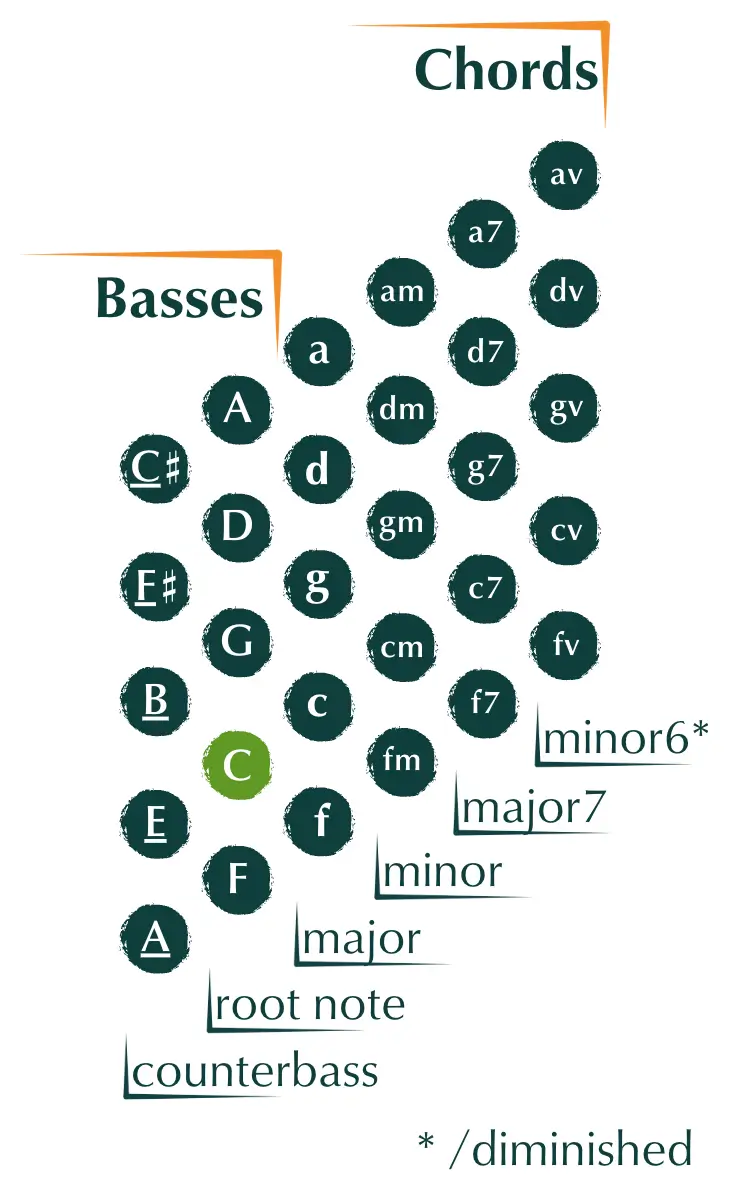
  • Capital letters = basic basses (2nd row)
  • Underlined capital letters = Counterbasses (1st row)
  • Lower case letters = chords (3rd to 6th row)
02_Accordio_14_11zon.jpeg

Note: In terms of pitch, chords lie above the bass notes and usually below the melody. Basses and chords in the appropriate rhythm provide accompaniment figures for a variety of musical styles - literally at the touch of a button!

Matthias Matzke - Accordion Virtuoso & Lecturer

2. standard bass fingering chart for all instrument sizes

Admittedly, with 120 bass buttons, the fingering chart of a large accordion looks quite confusing. The good news:in reality, 7 pieces of information are all you really need to be able to deduce everything else.

Note: In this fingering chart you look like in a video from the front on the accordion basses. This representation is the most common in Germany. You can also find mirrored representations on the Internet, which are common in Switzerland and the USA.

Quite a lot? Not with this video!

Instead of memorizing 120 buttons or looking at a chart over and over again, you will now learn 7 simple relationships. This is exactly how thousands of other accordion enthusiasts around the world have already managed to accompany intuitively instead of intellectually.

Tip: Music is more difficult to grasp soundlessly and theoretically than if you watch the example videos directly with your accordion:

You have internalized that with the video:

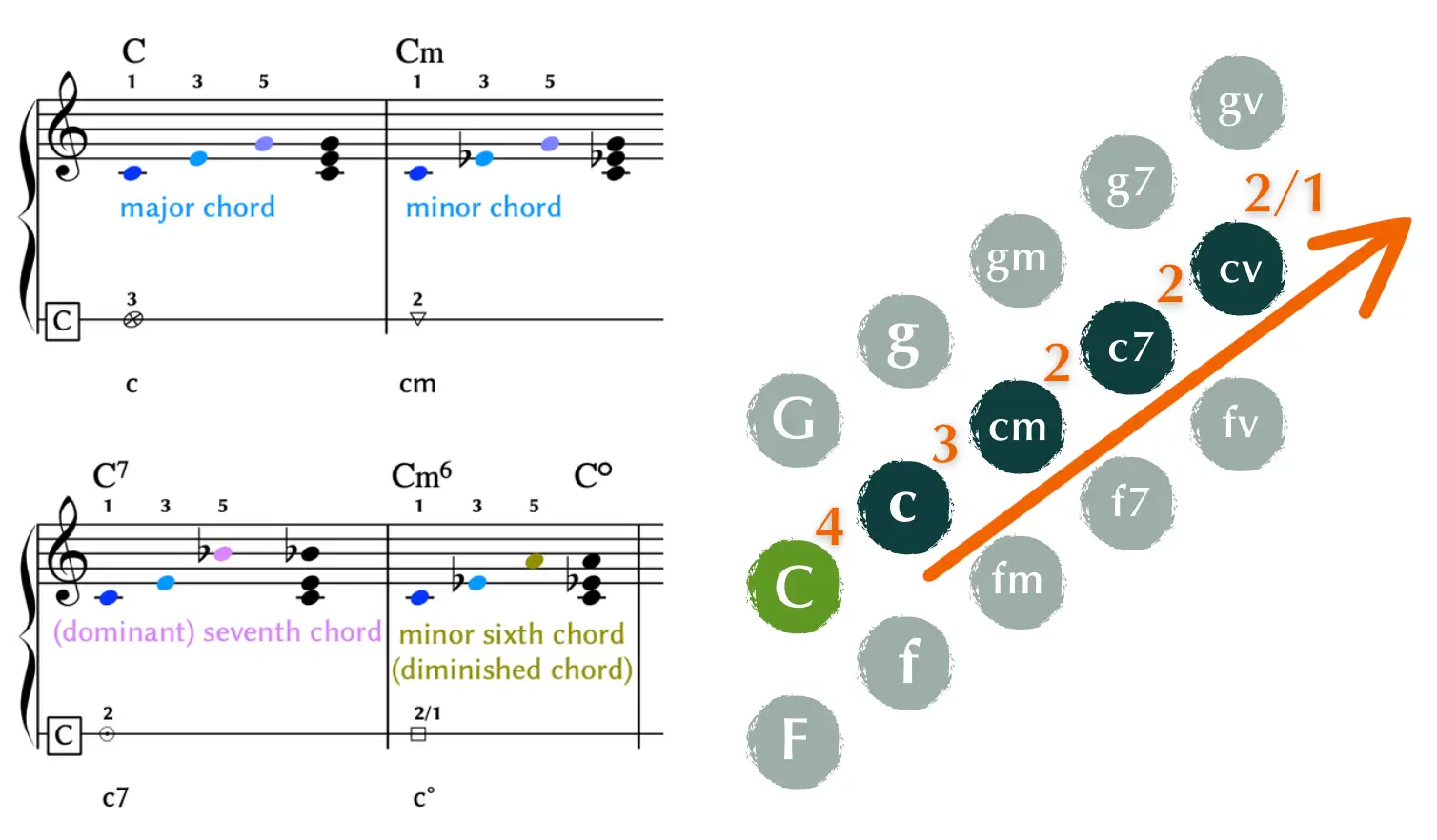
1. the second button on the inside of the bellows is the root bass with the fundamental note (e.g. C), to which all the buttons in the diagonal row refer.

2. the counterbass is on the innermost button in front of it. After a few 👉 basics of chord theory, you will find this major third for every root note (e.g. E to C).

3. the fifth bass lies vertically in the row above the root bass (e.g. G). Your hand moves downwards in the circle of fifths towards the floor (e.g. to F).

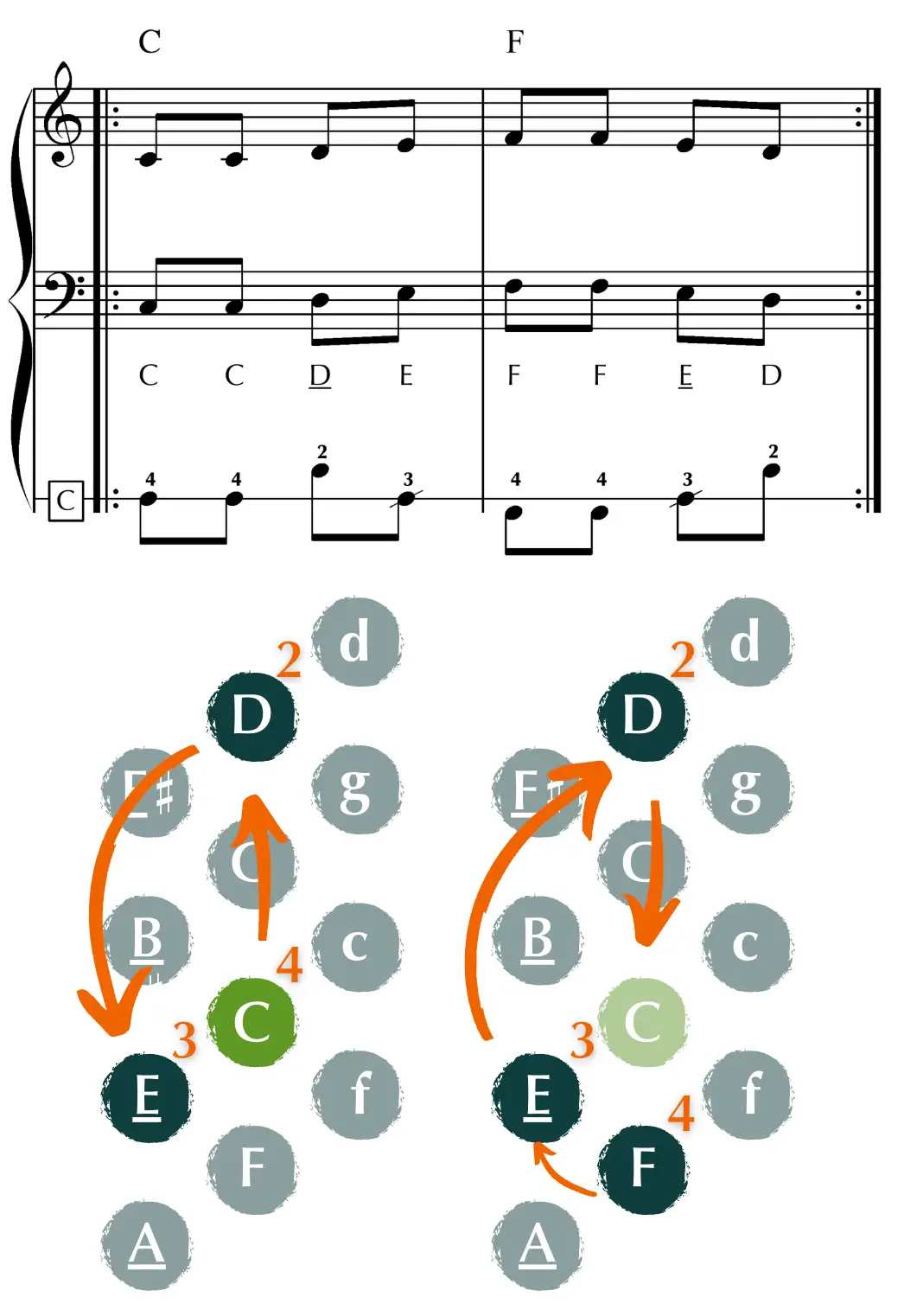
In the illustrations, the numbers next to the buttons show fingering suggestions. The bottom line illustrates relationships in Innovative bass notation. The line stands for the diagonal row from C. Crossed-out note heads are counterbasses.
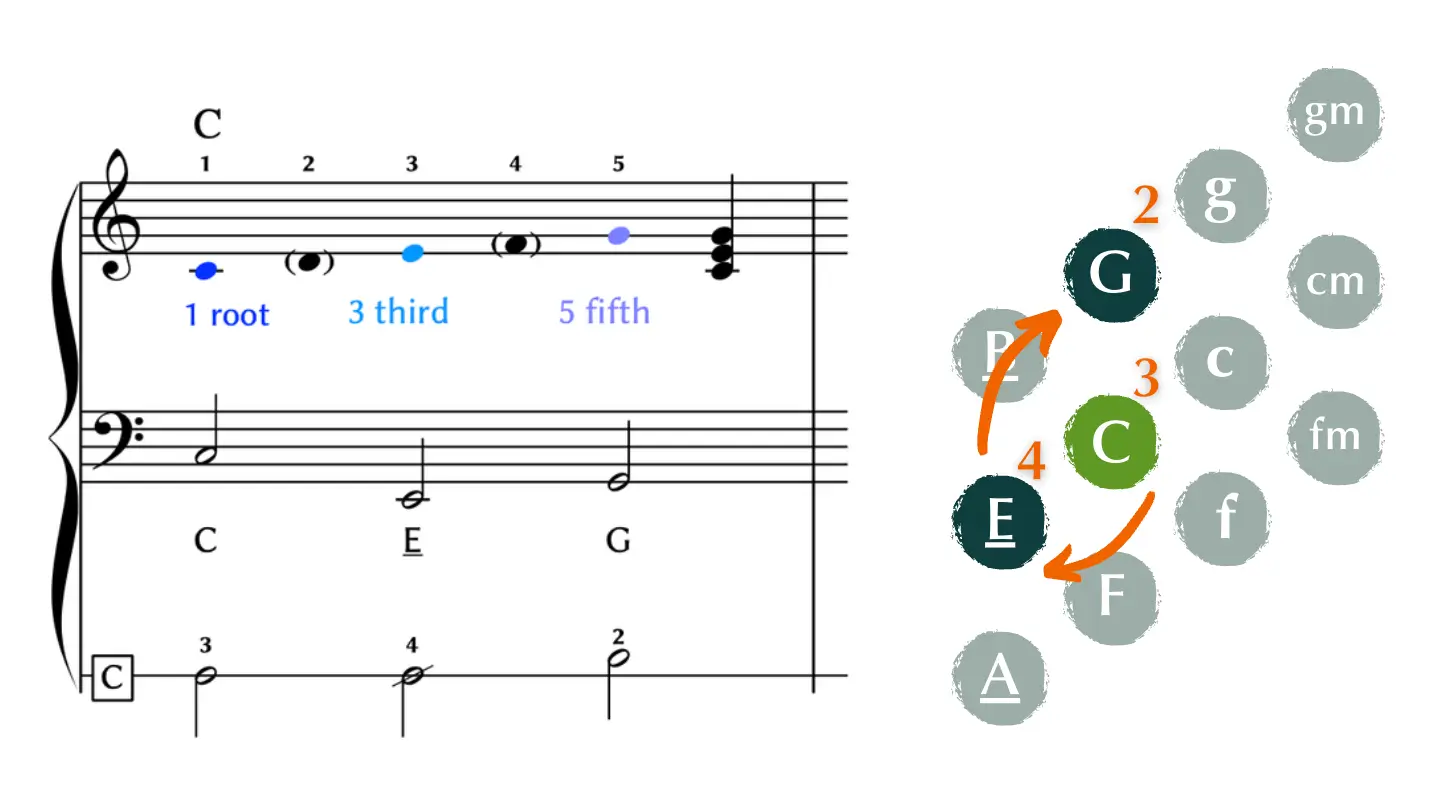
4. from the root bass outwards follows the major chord (e.g. c),

5. then the minorchord(e.g. cm).

6. the next chord sounds major with a minor seventh (e.g. c7)

7. and the outermost button has 2 functions: Minor with major sixth and diminished (e.g. cv).

To illustrate this, all the chords in my notation are on the C line and have different note heads.

Bildschirmfoto 2026-05-18 um 14.09.01

So many technical terms from music theory? Don’t worry. Goethe wrote: “Feeling is everything; name is smoke and mirrors”. As you heard in the video, you can develop an intuitive feel for the accordion bass and chord buttons. Understanding connections with technical terms is helpful, but you can also make progress without them!

The following practical examples for bass runs will help you to internalize the system. Do you already have your accordion to hand?

The Accordion Letter:

Joining the growing community of more than 7,000 accordion enthusiasts.

★★★★★

View our ratings

Get free sheet music, workshops, and practical practice tips from the world’s best accordionists!

You are hereby signing up for the free newsletter. This also includes emails about courses and offers. You can unsubscribe at any time. More information: Privacy Policy.

3. playing positions and bass fingerings: Diagonal or vertical?

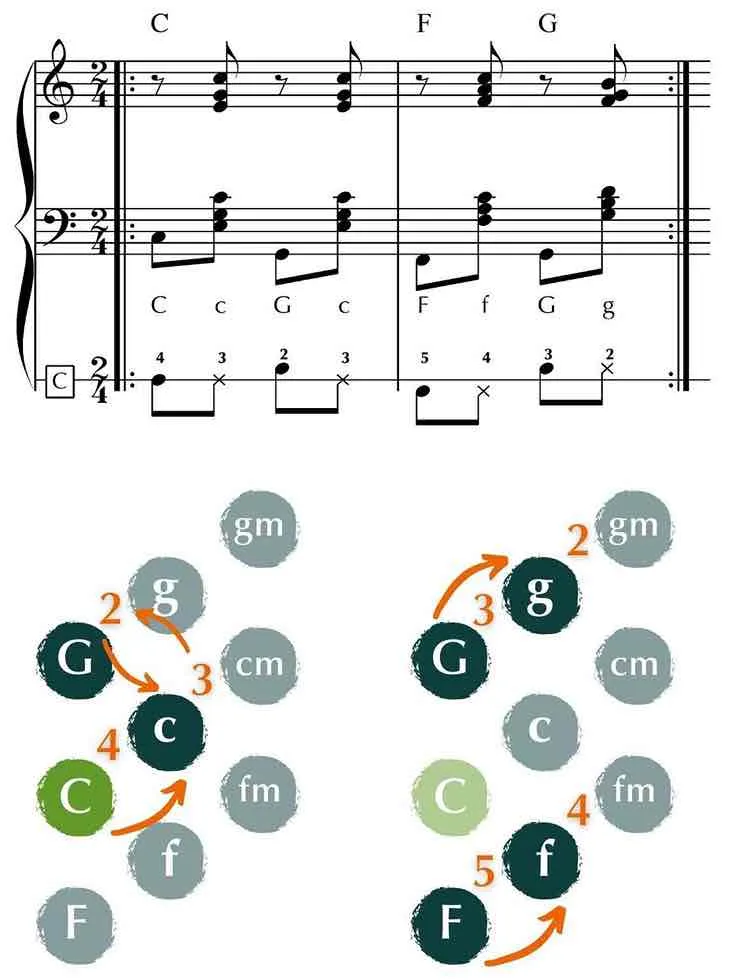
Diagonally you play harmonious soundscapes and authentic accompanying rhythms, such as in the polka:

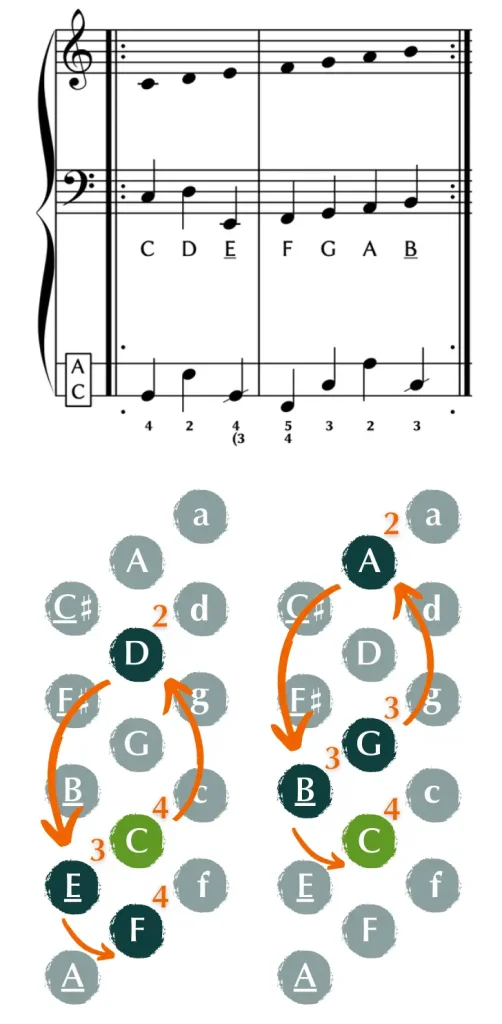
You play melodies and bass lines vertically, e.g. in boogie woogie:

Tip: In both positions, make sure you place your fingers loosely together to get a feel for the spacing. The numbers in the bass chart represent fingerings.

Note for players coming from the Styrian harmonica: On the Steirische, basses and chords are arranged alternately in a vertical position! The diagonal in the standard (Stradella) bass takes some getting used to at first.

4. The circle of fifths

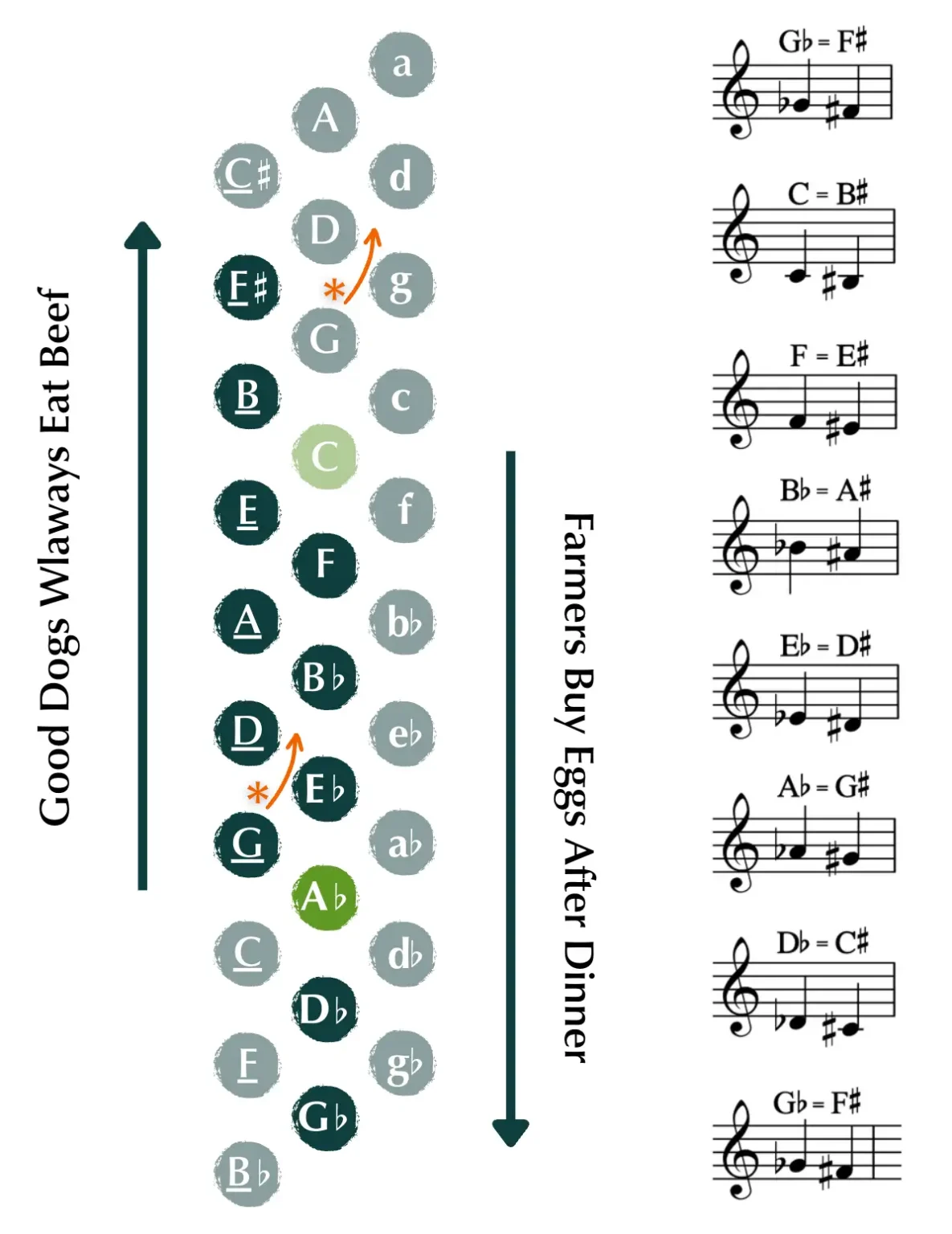
With two mnemonics, you can master the order of the basses in your sleep. They are stacked on top of each other in the so-called Circle of fifths. Let’s shed some light on this technical term: A Fifth measures the distance of 4 scale steps, e.g. from C upwards to G or from C downwards to F.

You can find out more about the useful correlations of this system in a separate blog post. You can quickly memorize the basses from C upwards and downwards with the following mnemonics.

# = upwards: Good Dogs Always Eat Beef

b = downwards: Farmers Buy Eggs After Dinner

*) The *stars* show how the order of the root nore is repeated on the major thirds.

02_Accordio_14_11zon.jpeg

With two overlapping basses (e.g. C and G) alternating, you can play the typical (fifth) alternating bass. This tuba sound blows the lid off dry learning: now you have a feel for what a fifth sounds like!

Matthias Matzke - Accordion virtuoso & composer
5. ingenious connection between left and right hand

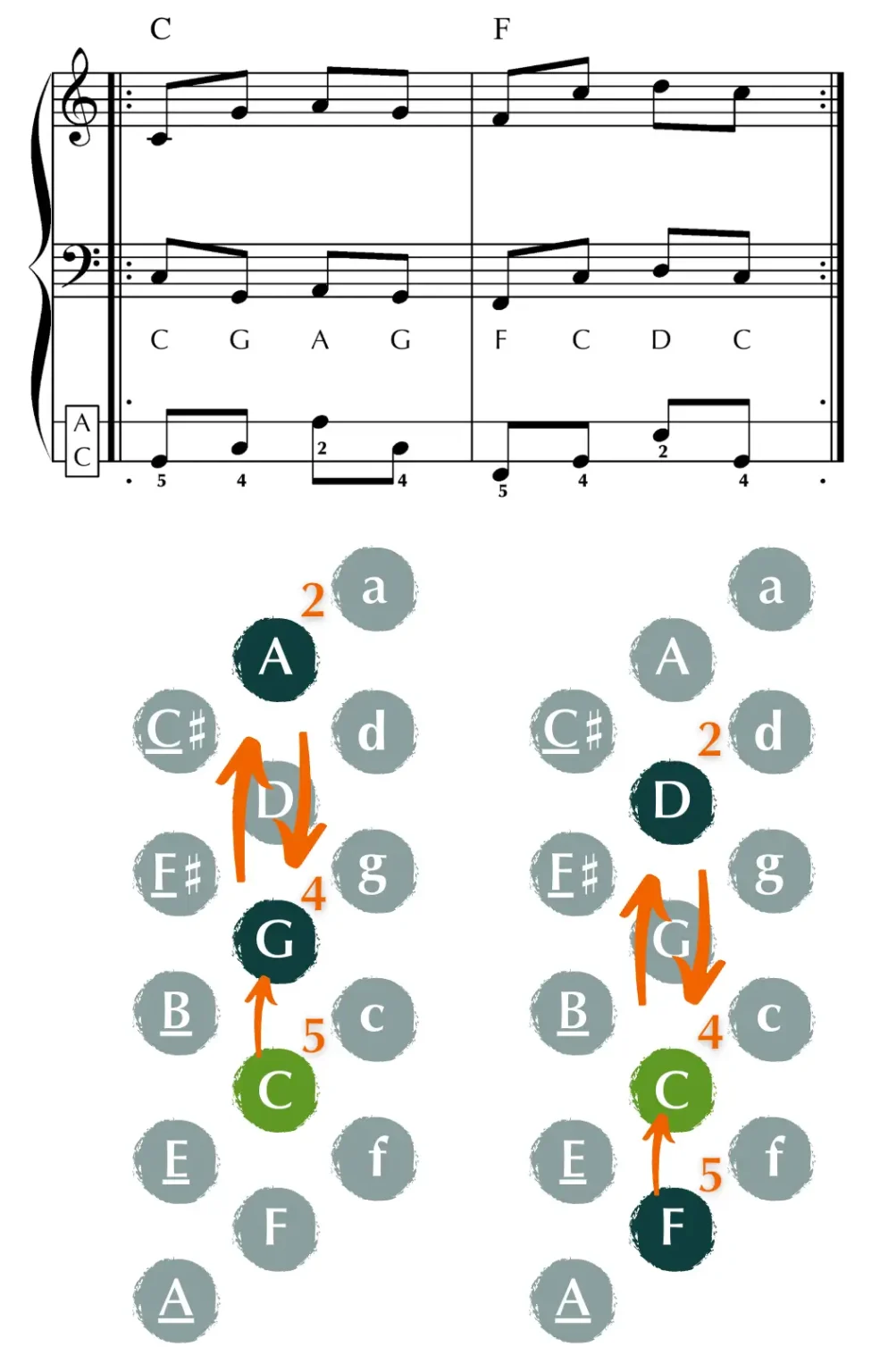
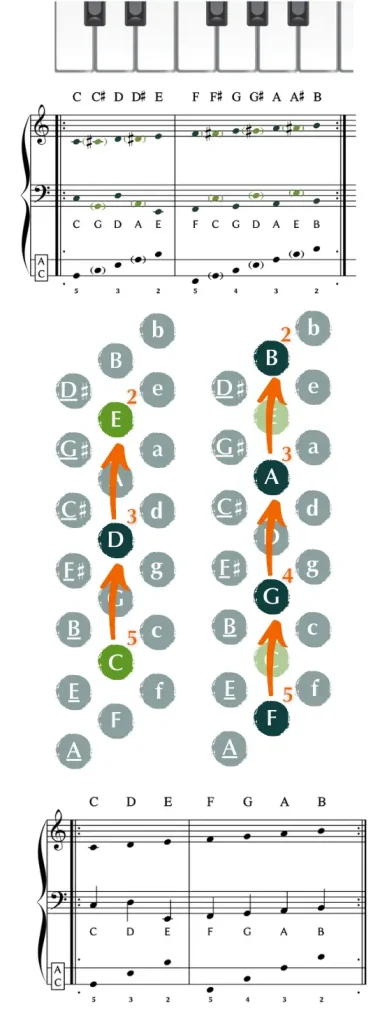
First of all: Scales consist of steps in whole tones and semitones.

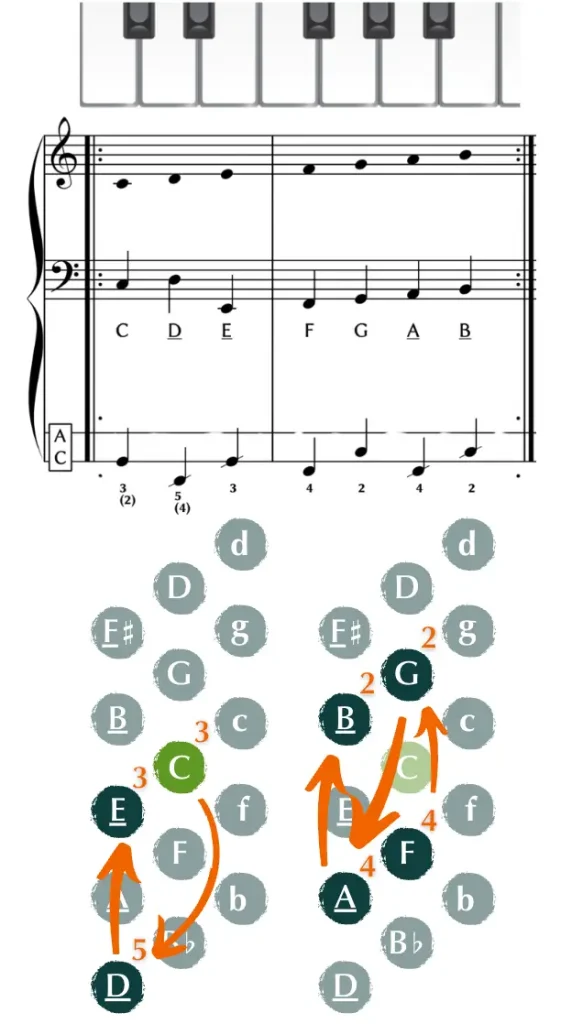
Whole tones you play by skipping a key on the right (including the black keys) and a button on the left. I call the grip for skipping “comb position”:

02_Accordio_14_11zon.jpeg

This fingering is great for understanding, but somewhat unusual due to the wide-spread “comb position”. Your fingers do not have to remain “glued” to the buttons when skipping a row. Tip: The fingering works in exactly the same way on the counterbasses:
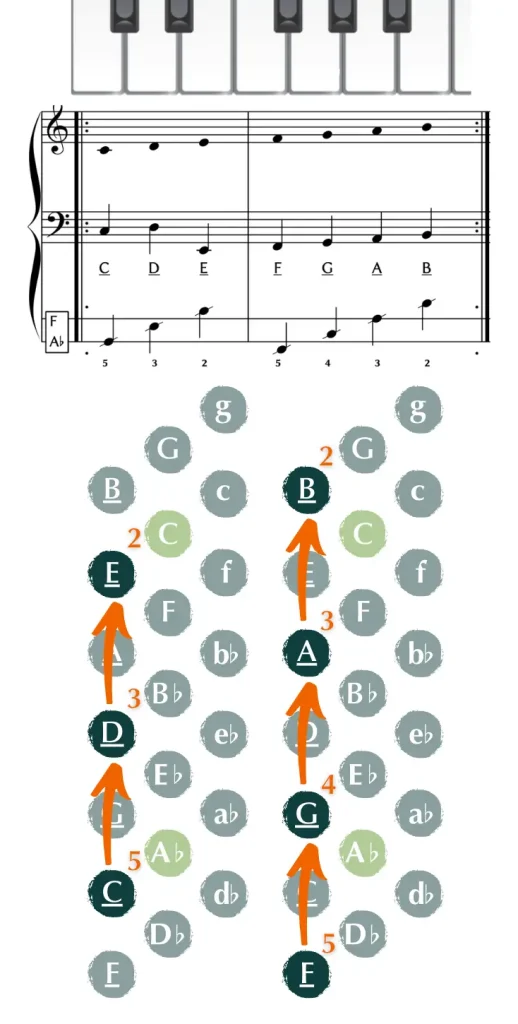
6. half steps a la Pink Panther

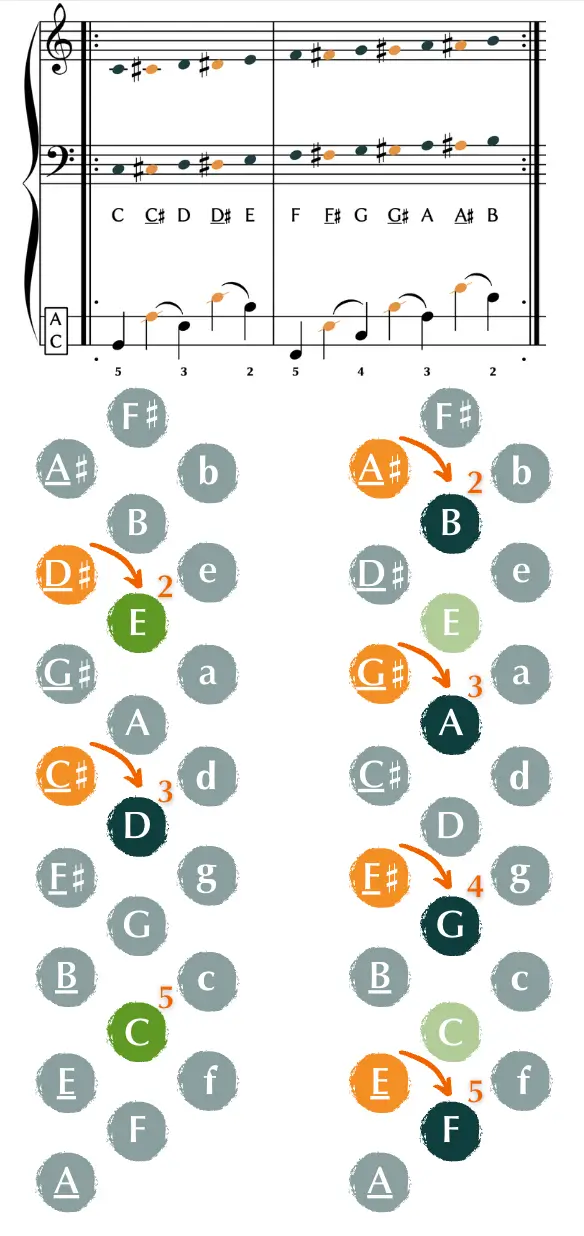
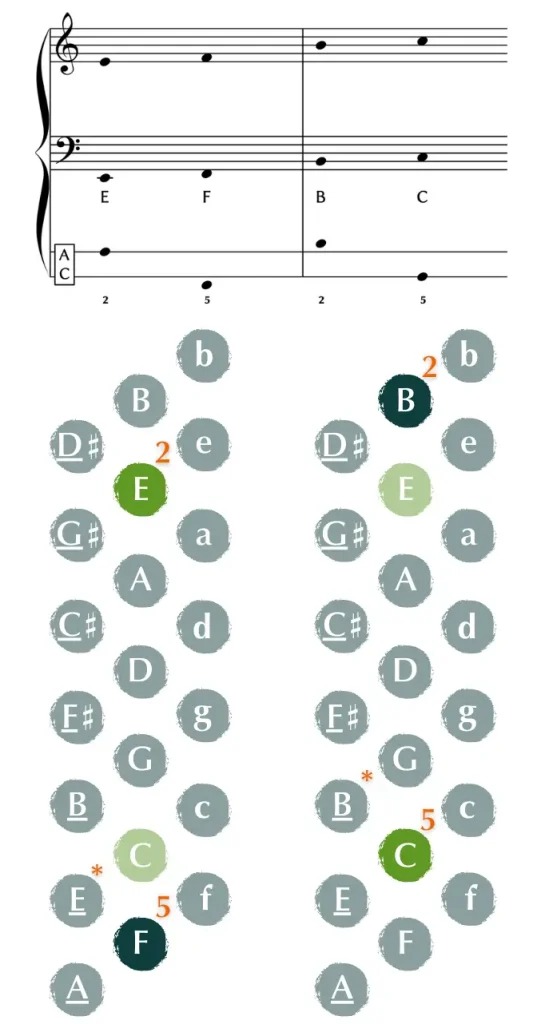
At each bar line you have already learned the first variation of the scale above, semitone steps to play. I call this fingering “bull position” because of its resemblance to a head with two horns:

*) The asterisks mark the obvious alternative in this example! Here is a typical bass run for connecting two neighboring buttons:

This principle can be extended to another way of playing the scale:

Note: The counterbass from the row above a root bass sounds a semitone lower.
For example, you can play B-C with fingering 4-5 on the left and right. Or C#-D with the fingering 2-3.

02_Accordio_14_11zon.jpeg

Half steps are also called “chromatic scales”. To understand the system, you can move the fan position in parallel and then switch to more flowing fingerings as in the video above. Do these sounds remind you of “Phantom of the Opera” or “Pink Panther”?

Matthias Matzke - Accordion virtuoso & composer

Summary:

  • You play whole tone steps by skipping a button in the “comb position”
  • You play semitone steps 1. from the spread in “bull position” or 2. rung-like with the counterbass above it
  • The standard bass is completely symmetrical: the semitone steps on thecounterbass also skip a row.
  • The wide-spread comb positions are helpful for internalizing the system. To play scales as fluently as possible, you usually combine root bass and counterbass.
The Accordion Letter:

Joining the growing community of more than 7,000 accordion enthusiasts.

★★★★★

View our ratings

Get free sheet music, workshops, and practical practice tips from the world’s best accordionists!

You are hereby signing up for the free newsletter. This also includes emails about courses and offers. You can unsubscribe at any time. More information: Privacy Policy.

7 Limitless possibilities and freedoms

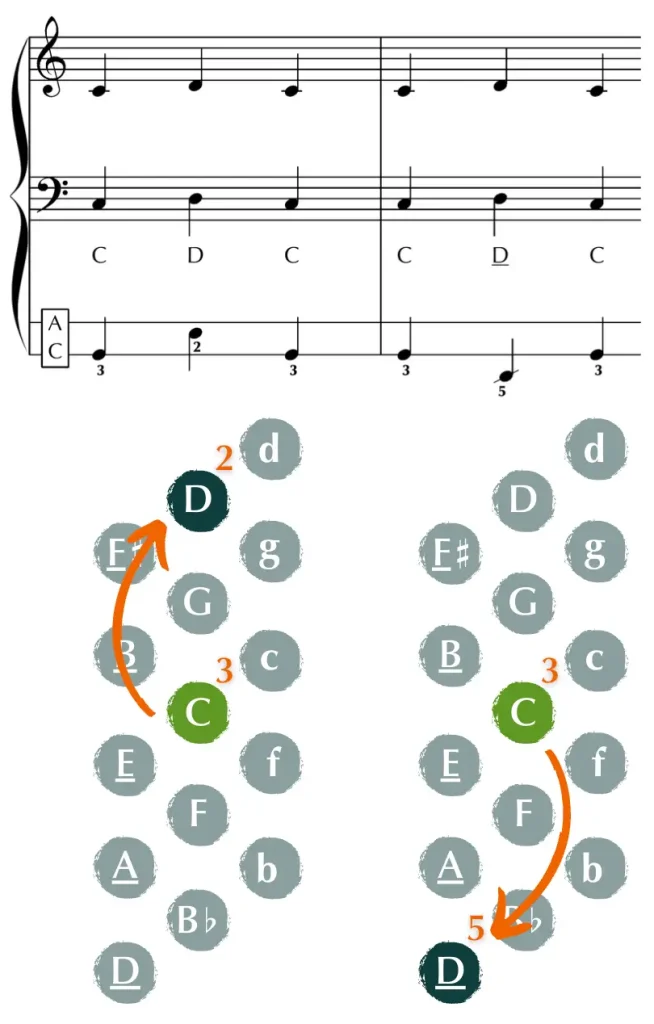
On larger instruments, you will find every bass note in both the fundamental and the third-bass row. E.g. from C to D:

If you know this, you have great opportunities to avoid jumps and find the best fingering.

Here is a fourth way to play the scale particularly fluently:

Now we have learned together an overview and a better understanding of the basses and chords on the accordion. 

My tip: try to work with the 7 information and your ear as much as possible. It will save you a lot of time in the long run. Let me know how you get on with it in the comments below!  

If you would like to be informed about new articles on the subject and about accordion playing tips, practicing tricks and music theory, please subscribe to the newsletter below.

See you soon and enjoy the accordion!

Your Matthias

Accordion Jump-Start – the ultimate beginners course

Play your first song in minutes and build real accordion skills from day one. No prior experience required:

Share guide:

Leave a Reply

Your email address will not be published. Required fields are marked *

🎁 Your Free Gift: 30+ Accordion Sheet Music – PDF Download

✓ 25 Christmas songs
✓ Happy Birthday & more
✓ Perfect for beginners

By signing up, I consent to receiving emails from Accordio containing offers and updates. I can unsubscribe at any time. More information: Privacy Policy